 Oral Health
1. Your mouth is an ecosystem, not a surface
Here's the mental model most of us grew up with: the mouth is a surface, bacteria are dirt, and brushing is cleaning. Scrub harder, get cleaner, done.
That model is roughly a century out of date. Your mouth hosts somewhere in the region of 700 identified bacterial species, and the overwhelming majority of them are either harmless or actively useful. They occupy physical space on your teeth and tongue, compete for the sugars you eat, produce compounds that keep more aggressive species in check, and help maintain the pH of your saliva.
The problem was never "bacteria." The problem is which bacteria are winning.
Balanced versus dysbiotic: the same mouth, different tenants
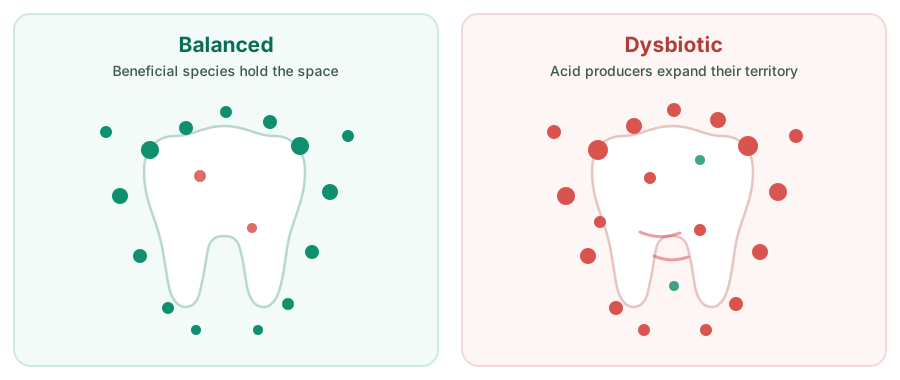
Meanwhile, in the pockets around your gumline, anaerobic species proliferate and trigger the low-grade inflammation that shows up as bleeding when you floss.
The core idea
- A healthy mouth is not a sterile mouth — it's a balanced one.
- Cavities and gum inflammation are largely ecological problems: the wrong species gaining ground.
- Anything that helps beneficial species compete is working with your biology rather than against it.
2. Why brushing alone doesn't fix everything
Brushing and flossing are genuinely non-negotiable. Nothing in this article replaces them. But they have a structural limitation worth understanding.
Mechanical cleaning is indiscriminate. A toothbrush and an antiseptic mouthwash don't distinguish between the species causing you trouble and the ones holding the line against them. Broad-spectrum antibacterial rinses in particular reduce total bacterial load — and then the ecosystem repopulates. Which species recolonise fastest depends on your diet, your saliva, your genetics and, importantly, what's still around to seed the regrowth.
There's a second issue: biofilm. Plaque isn't a loose dusting of bacteria; it's a structured, self-protecting community embedded in a polysaccharide matrix. It begins reforming within hours of a cleaning. You are never removing plaque permanently — you're managing its rate of return.
This is exactly why the "seed the good guys" approach became interesting to researchers. If beneficial species are present and competing for the same real estate and the same sugars, the reformation of harmful biofilm faces resistance from the inside.
Curious what a targeted oral probiotic looks like?
ProDentim packages three studied probiotic strains with prebiotic and mineral support into a chewable tablet designed to dissolve in the mouth rather than the stomach.
View Current Pricing on the Official SiteBacked by a 60-day money-back guarantee when purchased through the official website.
3. What ProDentim actually is
Strip away the marketing and ProDentim is a chewable oral probiotic tablet. It combines roughly 3.5 billion CFU (colony-forming units) of live bacterial cultures with a small supporting cast of prebiotic fibre, a mineral, an organic acid, and peppermint.
The design detail that separates an oral probiotic from a regular gut probiotic is the delivery method. A capsule you swallow is engineered to survive stomach acid and release its contents in the intestine — useful for digestion, largely irrelevant to your gumline. An oral probiotic is meant to be chewed or dissolved slowly so the cultures make direct contact with teeth, gums and tongue.
Whether transient contact leads to meaningful colonisation is an open question in the research literature, and we'll come back to that honestly in section 5.
4. The ingredients, one by one
Here is what's in the formula and what each component is understood to contribute.
| Ingredient | Type | What it's there for |
|---|---|---|
| Lactobacillus paracasei | Probiotic | A lactic-acid bacterium studied for competing with pathogenic species for adhesion sites. Trial data on paracasei variants has looked at gum health measures, though results vary by strain. |
| Lactobacillus reuteri | Probiotic | The most extensively studied strain in this formula for oral health specifically. Produces reuterin, an antimicrobial compound, and has been examined in randomised trials on gum bleeding and gingivitis. |
| B. lactis BL-04 | Probiotic | A well-characterised Bifidobacterium strain with a solid research base for general immune support. Evidence for oral-cavity outcomes specifically is thinner than for L. reuteri. |
| Inulin | Prebiotic fibre | A chicory-root fibre that acts as food for beneficial bacteria. Prebiotics are included to help the delivered strains establish rather than pass straight through. |
| Malic acid | Organic acid | Naturally occurring in strawberries and apples. Commonly included in oral products for its role in saliva stimulation and surface-stain support. |
| Tricalcium phosphate | Mineral | A calcium-phosphate compound. Calcium and phosphate are the raw materials enamel uses in remineralisation — the natural repair process that runs constantly against acid demineralisation. |
| Peppermint | Botanical | Provides flavour and contributes to breath freshness. Also makes a daily chewable tablet something people will actually keep taking. |
Worth knowing: the manufacturer publishes the total CFU count but not a per-strain breakdown, and doesn't disclose exact milligram doses for the non-probiotic ingredients. That's common in the supplement industry, but it does mean you can't directly compare doses against the amounts used in published trials. Treat any product that won't tell you its doses — this one included — with appropriate caution.
5. What the research does — and doesn't — show
This is the section most product pages skip, so let's be direct about it.
What's reasonably well supported
The idea that oral probiotics can influence gum health is not fringe. L. reuteri in particular has been studied in randomised, placebo-controlled trials, including work published in the Journal of Periodontology and other peer-reviewed dental journals, looking at outcomes like gum bleeding, gingival index scores and plaque measures. Several of these trials found statistically significant improvements versus placebo. There is also a growing body of review literature on probiotics for caries prevention, generally concluding that the approach is promising but not yet definitive.
Similarly, the underlying biology — competitive exclusion, pH modulation, remineralisation supported by calcium and phosphate — is standard, uncontroversial dental science.
What is genuinely uncertain
- Effects on the whole formula haven't been independently trialled. Research exists on individual strains. No published clinical trial has tested ProDentim as a complete product. That's a real gap, and it's true of most supplements in this category.
- Strain specificity matters enormously. Probiotic effects don't generalise across a species. A trial showing benefit for one L. paracasei strain says very little about a different paracasei strain. Without full strain designations you can't map the research onto the product with confidence.
- Effects appear modest and may not persist. Where trials find improvements, the effect sizes are typically moderate, and benefits often fade after supplementation stops — suggesting transient presence rather than permanent colonisation.
- Dosing is unverifiable. Without per-strain CFU figures, there's no way to check whether the amounts match what worked in the literature.
The fair summary
Oral probiotics are a legitimate and actively researched area of dental science, and the strains in this formula are real ones with real published studies behind them. But "the ingredient class has evidence" is a weaker claim than "this product is proven to work," and anyone telling you otherwise is selling rather than informing. This is a reasonable thing to try as a complement to good oral hygiene and regular dental care — not a replacement for either, and not a treatment for an existing dental problem.
6. How it's meant to be taken
The usage instructions are simple, but three details do a lot of work:
- One tablet daily, chewed slowly and allowed to dissolve rather than swallowed whole. The point is prolonged contact with the oral surfaces. Swallowing it immediately largely defeats the design.
- Morning is the common recommendation, often after brushing. If you use an antiseptic mouthwash, leave a gap of at least 30 minutes — rinsing with an antibacterial product right after taking live cultures is self-defeating.
- Consistency beats intensity. Daily use over weeks is the model these products are built around. Taking two tablets doesn't accelerate anything.
7. A realistic timeline
Marketing copy in this category tends to promise transformation. Here's a more grounded expectation, based on how oral ecology actually shifts:
| Period | What's plausible |
|---|---|
| Week 1–2 | Fresher breath and a cleaner mouthfeel are the earliest and most commonly reported changes. Largely a function of the peppermint and early bacterial shifts — pleasant, but not deep change. |
| Week 3–6 | If anything is going to shift in gum comfort or bleeding on brushing, this is the window where users typically report noticing it. Effects vary widely between individuals. |
| Week 7–12 | The realistic assessment period. Oral microbiome composition and enamel remineralisation both operate on timescales of months, not days. This is also roughly where the 60-day guarantee window sits — useful for making an honest call. |
| Beyond 3 months | Any maintained benefit depends on continued use plus the fundamentals: brushing, flossing, diet, and professional cleanings. |
If something hurts, see a dentist. Persistent tooth pain, a swollen or bleeding gum that won't settle, a loose tooth, or a sore that doesn't heal are all signs to book an appointment — not signs to wait out a supplement. No probiotic treats an abscess, a cavity, or periodontal disease.
8. Who it suits — and who should skip it
A reasonable fit if you:
- Already brush and floss consistently and want to add something at the ecological level
- Deal with persistent bad breath despite good hygiene
- Notice mild gum sensitivity or occasional bleeding when flossing
- Have used a lot of antibacterial mouthwash or recently finished a course of antibiotics
- Prefer a supportive, low-risk daily habit over an aggressive intervention
Probably not for you if you:
- Are looking for a substitute for brushing, flossing or dental visits — it isn't one
- Have an active dental problem needing treatment (that needs a dentist, now)
- Are immunocompromised, seriously ill, or have a central venous catheter — live probiotics warrant a doctor's sign-off in these cases
- Are pregnant, breastfeeding, or on medication without checking with your clinician first
- Expect dramatic, guaranteed results — the evidence doesn't support that framing
9. Honest pros and cons
✓ In its favour
- Strains with genuine published research behind them, especially L. reuteri
- Chewable delivery is the right format for an oral-health target
- Includes prebiotic and remineralisation-support ingredients, not just bacteria
- Easy to stick with — one pleasant-tasting tablet a day
- 60-day money-back guarantee through the official site
- Side effects reported are minimal and mild
✗ Against it
- No published trial on the complete formula
- Per-strain CFU counts and ingredient doses aren't disclosed
- Full strain designations aren't published, limiting evidence mapping
- Marketing claims run well ahead of the science
- Premium pricing versus generic oral probiotics
- Sold direct-to-consumer only, so no third-party retail comparison
- Results vary considerably between individuals
10. Five habits that matter more than any supplement
If you take nothing else from this page, take this section. These are the interventions with the strongest evidence base in all of dentistry, and they're mostly free.
1. Cut sugar frequency, not just quantity
This is the single most misunderstood point in oral health. Every sugar exposure drops your mouth's pH into the demineralisation zone for roughly 20–30 minutes. One dessert eaten in ten minutes is a single acid episode. The same amount of sugar sipped across an afternoon is a near-continuous one.
The same sugar, eaten two different ways
→ Swipe the chart sideways to read it
View this chart as a table
| Minutes | One dessert (pH) | Grazing (pH) |
|---|
Six small sweet snacks are worse for your teeth than one large dessert. This is the point almost nobody is taught.
2. Don't rinse after brushing
Spit out the excess toothpaste and stop there. Rinsing with water washes away the fluoride film that would otherwise keep working on your enamel for the next hour or two. This costs nothing and most people get it wrong.
3. Clean between your teeth daily
Roughly a third of each tooth's surface is where two teeth meet — and a toothbrush cannot reach it. Floss, interdental brushes, or a water flosser all work; the best one is whichever you'll actually use every day.
4. Take saliva seriously
Saliva is your body's own remineralisation system: it buffers acid and delivers calcium and phosphate back to enamel. That's the recovery slope you can see in the chart above. Dry mouth — from medication, mouth-breathing, dehydration or alcohol — flattens it. Drink water, and mention persistent dry mouth to your dentist, because it's a significant and often overlooked risk factor.
5. Go to the dentist before it hurts
Cavities and gum disease are painless for most of their progression. By the time something hurts, the cheap easy fix has usually expired. Regular check-ups exist to catch problems in the window where they're small.
A probiotic like ProDentim is a supporting player on top of these five. If the fundamentals aren't in place, no supplement compensates. If they are in place, adding ecological support is a reasonable next step.
11. Pricing and the guarantee
ProDentim is sold direct through the official website in three package sizes. Larger bundles reduce the per-bottle price. Each bottle contains a 30-day supply.
1 Bottle
Smallest commitment. Best for testing tolerance and taste.
3 Bottles
Matches the realistic assessment window from section 7. Usually includes bonus materials.
6 Bottles
Lowest per-bottle cost. Only sensible once you know it agrees with you.
Please verify prices on the official page before ordering. Supplement pricing, shipping terms and bonus offers change frequently, and this page may not reflect the latest figures. The guarantee is stated as 60 days from purchase through the official website — which conveniently overlaps the window in which you'd actually be able to judge whether it's doing anything.
Check today's pricing and guarantee terms
Buying direct is also the only way to be sure of what you're getting — live-culture products sold through third-party marketplaces carry real storage and authenticity risks.
Go to the Official ProDentim Site →60-day money-back guarantee · Official website only
12. Frequently asked questions
Is ProDentim a replacement for brushing and flossing?
No, and it shouldn't be marketed as one. Mechanical plaque removal is the foundation of oral health and nothing taken orally substitutes for it. An oral probiotic is designed to work alongside brushing, flossing and professional cleanings by supporting the bacterial balance in your mouth.
How long before I'd notice anything?
Breath freshness is the earliest and most commonly reported change, often within one to two weeks. Anything relating to gum comfort typically takes longer — most users who report a difference describe it somewhere between weeks three and eight. Give it a full 8–12 weeks before judging, which sits comfortably inside the 60-day guarantee period.
Are there side effects?
Reported side effects are minimal — occasional mild digestive adjustment in the first few days, which is typical when introducing any probiotic. If you're immunocompromised, seriously ill, pregnant, breastfeeding, or taking prescription medication, check with a healthcare professional before starting. This is standard advice for all live-culture supplements, not a warning specific to this product.
Can I take it with other supplements or medications?
There are no widely reported interactions, but antibiotics are the obvious exception — they will reduce or eliminate the live cultures. If you're on a course of antibiotics, separate doses by a few hours, and ask your prescriber. For any prescription medication, ask your pharmacist rather than relying on a web page.
Will it whiten my teeth?
Not in the way a peroxide whitening treatment does. Malic acid may help with some surface staining over time, and a healthier oral environment can mean less plaque-related discolouration — but if visible whitening is your primary goal, a dedicated whitening product or an in-office treatment is the appropriate tool.
Is it suitable for children?
It's formulated and marketed for adults. Children's oral health needs differ, and dosing hasn't been established for them. Ask a paediatric dentist before giving any supplement to a child.
Where should I buy it?
Through the official website. Two practical reasons: the 60-day money-back guarantee applies to official purchases, and live-culture products are sensitive to storage conditions and handling — third-party marketplace listings carry genuine risks around both authenticity and viability of the cultures.
What happens if I stop taking it?
Research on oral probiotics generally suggests the introduced strains are transient rather than permanently colonising, and measured benefits tend to fade after supplementation stops. Practically, that means this is a maintenance habit rather than a one-time fix — which is worth factoring into the cost calculation before committing.
13. The bottom line
The science underneath oral probiotics is real. Your mouth genuinely is an ecosystem, dysbiosis genuinely drives cavities and gum disease, and there genuinely are published randomised trials showing that specific probiotic strains — L. reuteri most convincingly — can improve measurable gum health outcomes.
ProDentim is a reasonably designed product built on that premise: sensible strain selection, the correct delivery format for an oral target, and supporting ingredients that make biological sense. The 60-day guarantee means trying it carries limited financial risk.
What it isn't is proven. The complete formula hasn't been independently trialled, the doses aren't disclosed, and the marketing claims run considerably ahead of what the evidence supports. Anyone promising you a guaranteed transformation is overselling.
So the honest framing is this: if your fundamentals are solid and you want to add ecological support at a modest cost with a refund window, it's a defensible thing to try. If you're hoping it will substitute for brushing, flossing, or a dentist appointment you've been putting off — it won't, and that appointment is a far better use of your money.
Ready to look at it yourself?
Current pricing, package options and full guarantee terms are on the official product page.
Visit the Official ProDentim Website →Then come back and re-read section 10 — those five habits are still the highest-value thing on this page.
Further reading
- Krasse P. et al. — Decreased gum bleeding and reduced gingivitis by the probiotic Lactobacillus reuteri. Swedish Dental Journal. PubMed
- Schlagenhauf U. et al. — Consumption of Lactobacillus reuteri-containing lozenges improves periodontal health: a randomized controlled trial. Journal of Periodontology, 2020. Wiley
- Teughels W. et al. — Probiotic effects of orally administered L. reuteri-containing tablets on subgingival and salivary microbiota in gingivitis patients. PubMed
- Nizami M.Z.I. et al. — Probiotics for caries prevention: a narrative review. 2025. SAGE Journals
- Heidari et al. — Postbiotics and Dental Caries: A Systematic Review. Clinical and Experimental Dental Research, 2025. PMC